

Hi everyone 👋,
I’m starting a Rust Series on the newsletter, a beginner-friendly set of posts designed to introduce Rust in a clear, practical way.
I know many of you come from software engineering, data, analytics, or technical backgrounds, and you follow this publication to learn relevant, future-shaping ideas. This series is exactly in that spirit.
If you have basic programming experience, you’ll follow along comfortably. And if you’d like to engage with other engineers and learn together, feel free to join the Substack chat, start a thread, and be part of the learning vibe.

I come from a heavily Python-driven background, and I know many of you do as well. Python has been the de facto language in our skillset / work for years.
So throughout this Rust series, I’ll include notes, comparisons, and references specifically for Python engineers learning Rust, to make the transition smoother and more intuitive.
Why Rust ? and Why now?
With the launch of Gemini 3 and all the buzz around it, Google made one thing very clear: the next advantage in AI won’t come from bigger models, it will come from optimization. This is where wearing an engineer’s hat truly makes a difference. Google excels at that.
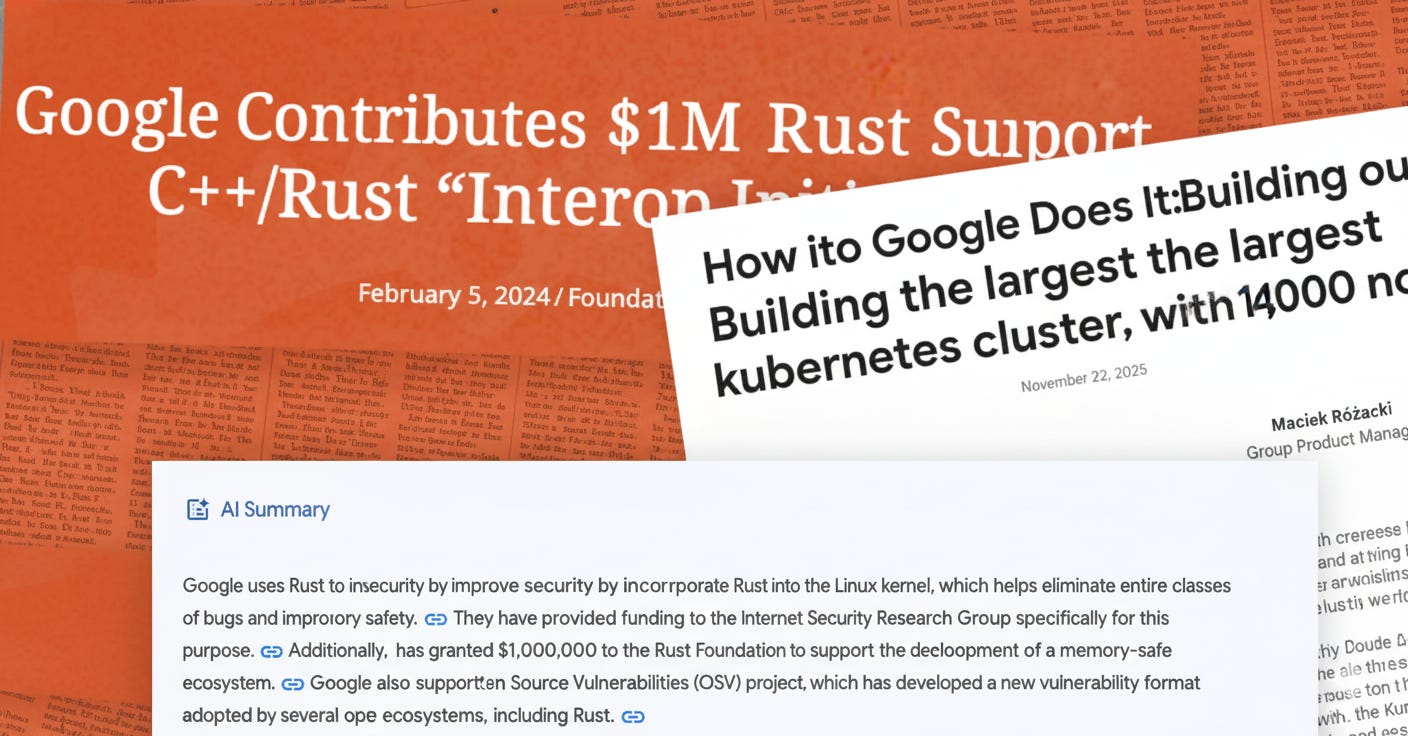
Their success is an outcome of optimization at every layer:
Custom hardware (TPUs)
Highly efficient Kubernetes-scaled AI infra
Developer-first agent tooling
And an increasing shift toward high-performance languages like Rust to reduce cost, secure and improve efficiency.
This aligns with what I’ve shared in my roadmap. Rust is shaping up to be a major engineering advantage in the AI era, giving us the speed, safety, and efficiency required for modern AI systems.
Why This Matters for Us as Engineers
Today, many people are still building at the surface, assembling LLM APIs and sprinkling AI-powered features on top.
The product and business mindset often focuses on “How do we sell this?”. Vibe-coding has becoming the norm, and chasing trends, shipping fast, and optimizing for demos over depth.
But as engineers, we think differently. We ask: how is it built, how does it scale, and what happens next?
The market is often too shortsighted to distinguish between true engineering and vibe-driven development. Junior engineers may now ship faster with code-agent assistance, and senior engineers can design better architectures with AI but the real question is: are we simply delivering features, or are we actually preparing for what’s coming next?
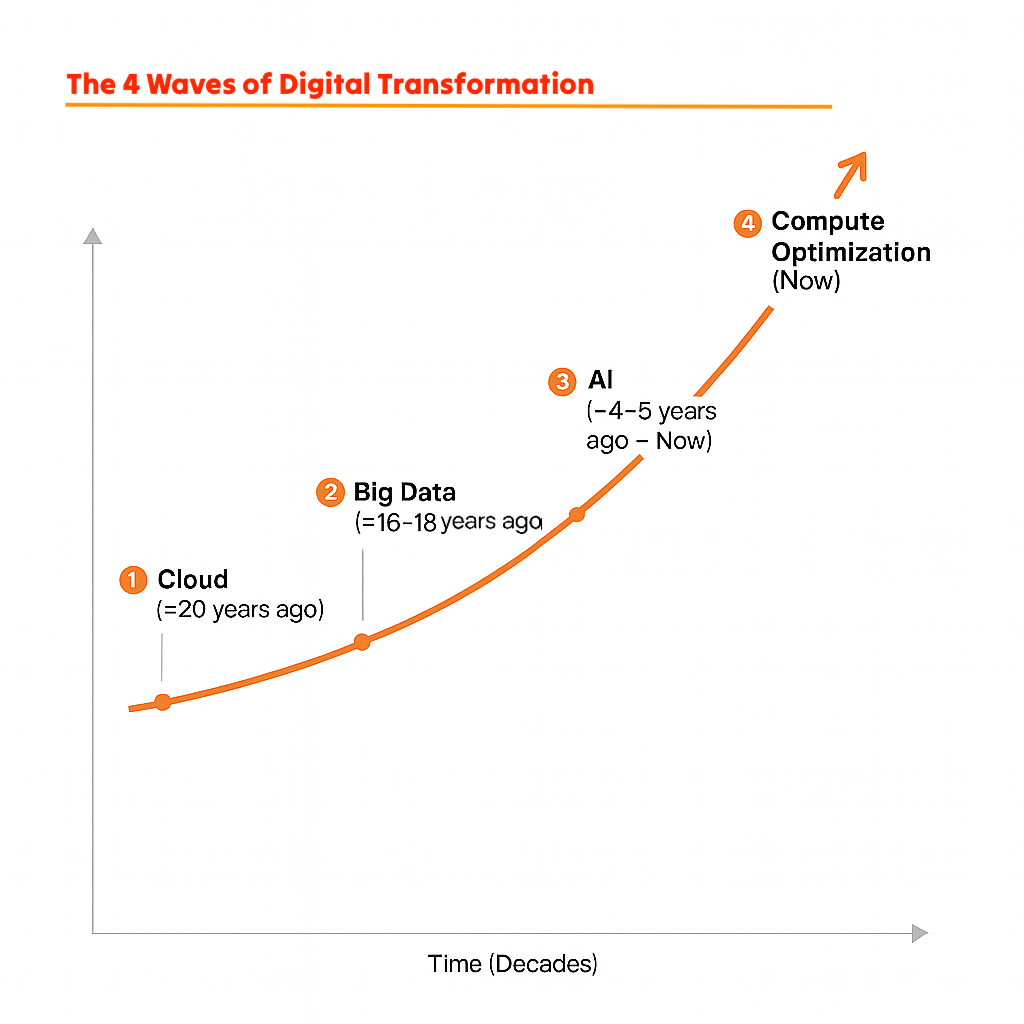
The next phase is about performance, reliability, and deep optimization.
And it’s already visible:
Core Python libraries ( eg: uv ) are being rewritten in Rust
Data Computation ( eg: duck db ) are getting dramatically faster
Agents are automating setup, orchestration, and dependency management
Infrastructure costs are dropping through more efficient runtimes.
The things we once treated as “infinite resources” like scaling clusters, spawning big jobs, loading heavy libraries will soon be optimized and automated by AI systems backed by Rust-level performance.
Did you know that Amazon S3 leverages Rust to attempt to return responses with single-digit millisecond latency? To name a few, AWS product components written in Rust include Amazon CloudFront, Amazon EC2, and AWS Lambda among others. - AWS Blog
Time to Upgrade Your Tools?
I recently moved from iTerm to WezTerm, and the difference is immediately noticeable. It feels lighter, faster, and far more responsive.
And it’s not just WezTerm. Many of today’s popular terminals and shells like Warp, Alacritty, and Starship are also built in Rust, which explains their speed and lightweight feel.
Zed is another great example: a next-generation code editor built in Rust for high-performance collaboration with both humans and AI.
I could call out many more examples, but the pattern is clear. Rust is quietly powering the fastest tools we use every day.
This Rust series is my way of helping you prepare for that shift.
Stay tuned 🦀