
Artifacts – November ’25 Edition
Tips for AI Learning, Brooks' Law and Peer Spotlight

Hello Engineers 👋🏽
Welcome to this month’s newsletter! , Let’s dive in
🧩 Engineers Placeholder
Brooks’ Law: When More Isn’t Faster
There is an old rule in software engineering called Brooks’ Law. It says,
“Adding manpower to a late software project makes it later.”
The idea came from Fred Brooks, who wrote a famous book in 1975 called The Mythical Man-Month. He learned this while leading IBM’s OS/360 project, one of the biggest software efforts of its time.
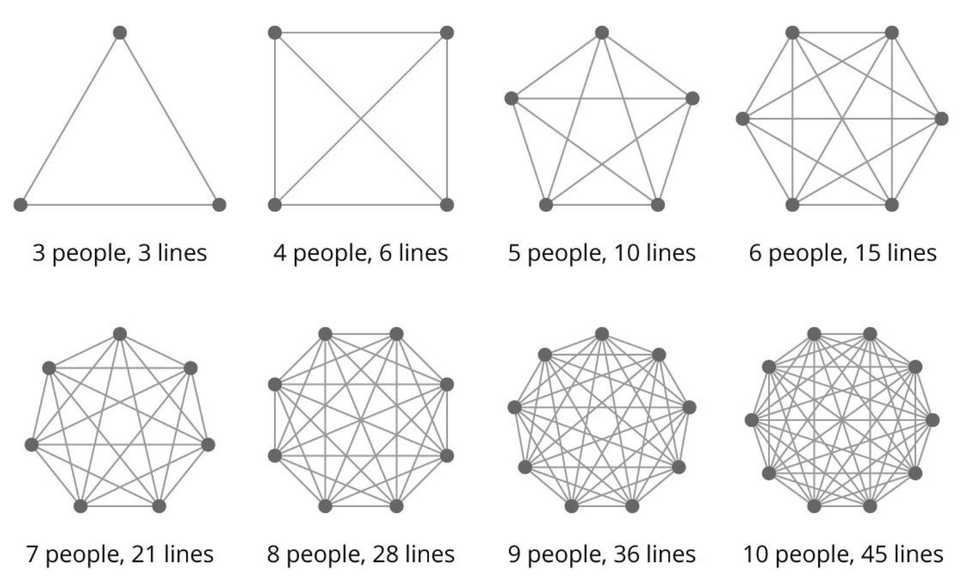
Brooks realized something counterintuitive: when a project is already late, throwing more people at it doesn’t speed things up. In fact, it usually slows it down. New team members need onboarding, communication lines multiply, and coordination overhead rises faster than productivity. You spend more time explaining the work than doing it.
The real problem isn’t the people, it’s the timing. Every project has a point where the cost of communication or collaboration becomes higher than the value of extra hands. When that happens, what the team really needs is clarity, not more contributors. A few focused engineers who understand the system well can often move faster than a large, fragmented group.
The real lesson is simple: bring help early, not late.
Invest in clarity first. Make sure requirements, goals, and priorities are well understood before scaling.
Focus on coordination. Reduce unnecessary meetings and clarify ownership. One person accountable for each module beats multiple people guessing who should do what.
Plan for gradual scale-up. Add team members early in the project, when onboarding costs are manageable, not in the middle of a crunch.
🏁 Preparing for AI ?
Learning AI doesn’t always follow a straight path. The most effective approach today is often non-linear: jumping between theory, practice, and exploration based on curiosity or the problems you’re trying to solve.
You might experiment with a tool before fully understanding it, then circle back to study the underlying concepts. This back-and-forth keeps learning practical and aligned with real-world progress.
AI is fast-evolving. New open-source tools, platforms, and research papers appear almost daily, often challenging what we knew just weeks ago. You can’t rely on a single source. Mastery isn’t achieved by completing a course in a week; it requires pacing yourself and adopting learning methods that fit your schedule.
Last month, I shared a roadmap for learning AI and how to tailor it to your goals.
In this post, I want to share the different learning modes, I’ve been using to keep growing, even with a busy work schedule, family life, and being in my 40s where balancing health matters.
Some days, hands-on, focused practice works best. Other times, I learn through books, podcasts, or short courses that fit around the day. The approach that works for you will depend on your goals, background, and the time you can realistically commit.
1. Focused Learning
This is your deep-work mode, setting aside uninterrupted time to code, run models, or follow a structured course. It’s great when you want to build strong foundations or complete a hands-on project.
A good way to start is by picking a use case that connects directly to your current role and learning how to apply AI there.
For example, an Analytics Engineer or Data Scientist could explore how to build an AI SQL Agent to automate or enhance data querying tasks.I recommend this course - Build with AI: SQL Agents with Large Language Models - A highly rated LinkedIn Learning course created by Rami Krispin
2. Exploratory Learning
This is about wandering a bit, reading research summaries, trying out new open-source tools, or watching short explainer videos. It keeps your curiosity alive and helps you connect dots across topics.
For example, I follow YCombinator AI Startups, which is a great way to discover new commercial and enterprise products as well as interesting open-source projects emerging in the field.
3. Passive Learning
When life gets busy, you can still stay engaged by listening to AI podcasts, watching talks during commutes, or reading newsletters. It’s a simple way to keep your brain in learning mode, even when you don’t need full attention, a kind of “low-frequency learning”.
For example,
I listen while returning from work in the evening, when I’m already tired and can’t read a book, or standing in a crowded train.
Sometimes, I also copy blog posts into a notebook LLM and convert them into a conversational podcast-style format in my native language. This makes the content more engaging and easier to absorb.
4. Community Learning
Join online communities, open-source groups, or study cohorts. Discussing ideas and building with others often accelerates understanding and keeps you motivated when progress feels slow.
For example, I follow the OpenLLM community on X and share quick knowledge sharing on interesting topics in Substack Notes.
5. Reflective Learning
After a project or course, take time to step back and summarize what you’ve learned. Write short notes, explain it to someone else, or post your takeaways as blog post. Teaching, even informally, reinforces learning like nothing else.
For example, Apart from writing, I offer free mentorship on ADPList.org, which gives me the chance to share my experiences and lessons learned, while also learning new things from my mentees.
🌟 Peer Spotlight
BubbleLan – A Toy Programming Language
BubbleLan is a simple toy programming language built in Python, complete with its own syntax, REPL, and file execution system. It supports variables, lists, arithmetic operations, conditionals, and loops.
If you’re interested in programming languages, compilers, interpreters or just enjoy seeing engineers explore ideas deeply, this post is a must-read. The blog post has detailed walkthrough of her experience building BubbleLan from scratch.
What it takes to build a programming language
📣 Recap
October was all about practical, engineering-focused guides. Sharing a few of my recent posts 📚 in case you missed them.


Thanks for reading! I’d love to hear your thoughts or feedback 🙂
KK
Thank you so much for the mention!